
© 2023 Humanz Mediate
UX Research
UX/UI
Prototyping
Overview
Design Team
Selena Yip, UX Designer
Mina Hussain, UX Designer
Client
Humanz Mediate
Timeline
12 weeks
Who is Humanz Mediate?
Humanz Mediate is team of trained mediators, committed to guiding difficult conversations using their core values of collaboration, consent, and acceptance. They provide mediation services that center participants’ needs in order to create fulfilling outcomes for all those involved.
What is mediation?
Mediation is an alternative dispute resolution (ADR) method that involves assisted negotiation where a trained, unbiased third party helps two or more parties communicate to resolve their dispute. Mediation is a process that allows affected parties to have full control of their own solution and is significantly less expensive and time consuming than other dispute resolution methods like litigation.
Problem
Humanz Mediate does not have a standard intake form, making it difficult for the mediation team to gather the necessary information to respond to mediation requests in a timely manner.
Goals
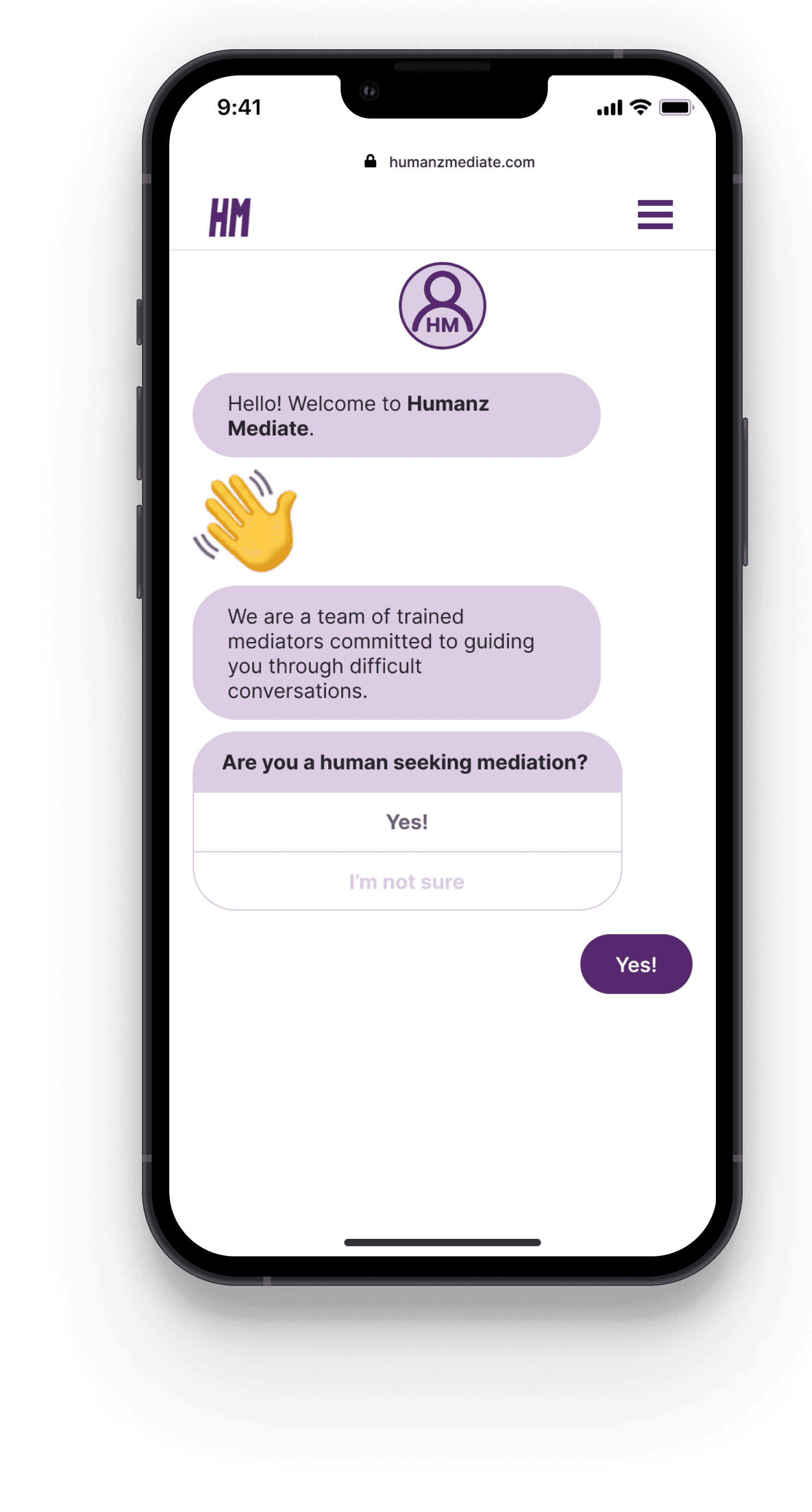
Create an automated intake form that will collect the necessary information to start mediation coordination and help users feel prepared and empowered by providing basic mediation education and a walkthrough of the mediation process.
Interviews
Client Interview
We started by learning more about the company, the current user base, and Franz’s personal experiences in the mediation industry. Franz recalled experiences that influenced her to start her own mediation company, “I’ve seen mediators try to force participants into solutions that they don’t want, just so that the mediator can clear the case. It’s unfair to the participants and a completely unethical way to practice mediation”
“Users need emotional safety when communicating their needs.”
-Elizabeth Franz, CEO of Humanz Mediate
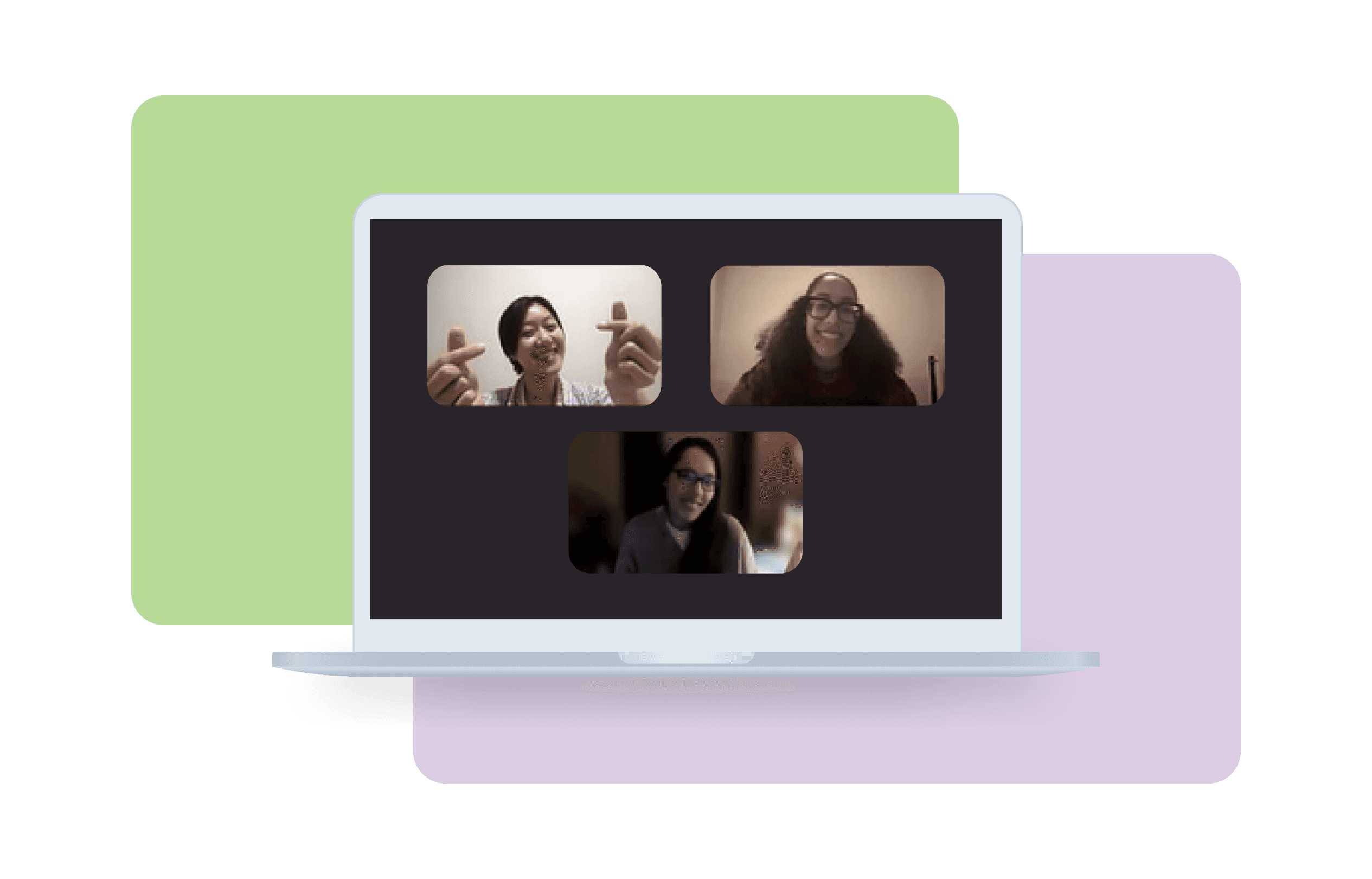
Examples of mediated conflicts at Humanz Mediate:
Family separation (ie: two parents seek mediation with the goal of drafting rules for amicable separation)
Workplace conflict (ie: employers seek mediation for team members that are both valuable to the company but have a hard time working together)
User Interviews
We interviewed friends and family (Ages 20s-50s) and were able to get a greater understanding of a user’s emotional and practical needs. Our team split user interviews into two parts:
Three interviewees were asked about their experiences and needs when booking professional services, such as medical appointments.
Two interviewees were asked about their experiences navigating sensitive conflicts in professional settings.
Findings
Users want to have multiple ways of contacting the professional service, since different situations affect their ability to use specific modes of communication (ie: unable to call during work hours)
Users who are in conflict in professional settings are wary of power dynamics and look for ways to protect themselves from harm
Users want to feel a sense of choice, control, and safety when communicating their needs.
Competitive Analysis
Lacking direct competitors in the mediation market, we looked at companies that offered wellness services and/or had engaging onboarding forms and analyzed their mobile sign-up forms.
Overview
Strengths
Weaknesses
meditation and mindfulness app focused on helping user integrate better habits for better mental health
goals questionnaire makes the app feel more personalized to each user
consistent and enjoyable visual branding
payment screen uses deceptive patterns with a paid plan pre-selected
connects users to medical and dental providers, allowing them to make in-person and telehealth appointments
short onboarding allows for user to get to the main app more quickly
no instructions on how user can start using the app/book appointments
lacks transparency about how personal info will be used
provides users with various types of insurance such as home and pet insurance
has an engaging and friendly intake
text-like onboarding is friendly and helpfully guides users through each step
no way to exit automated intake to talk to a real person
Findings
Humanz Mediate is at a disadvantage because mediation is not the most well-known ADR. Part of the intake form should be focused on ensuring users have complete understanding of the mediation process so that they can decide whether mediation is the right process for them.
The intake form should reflect the company’s values of transparency and sensitivity, by avoiding deceptive patterns.
Mediation is an ADR process that is controlled by the participants that has to be handled with sensitivity and care. The intake journey should give users a sense of control and comfort.
Key Insights + Design Principles
Drawing from our research, we identified three design principles to guide us in finding creative solutions that addressed client challenges and user needs.
Validation
Due to sensitivity of conflict, users need to feel safe and empowered throughout the process of finding a resolution.
Transparency
Having clear language and providing guidance helps the user feel more prepared for the mediation process
Accessibility
The form needs to serve users that come from different backgrounds, and have different challenges, goals, and needs.
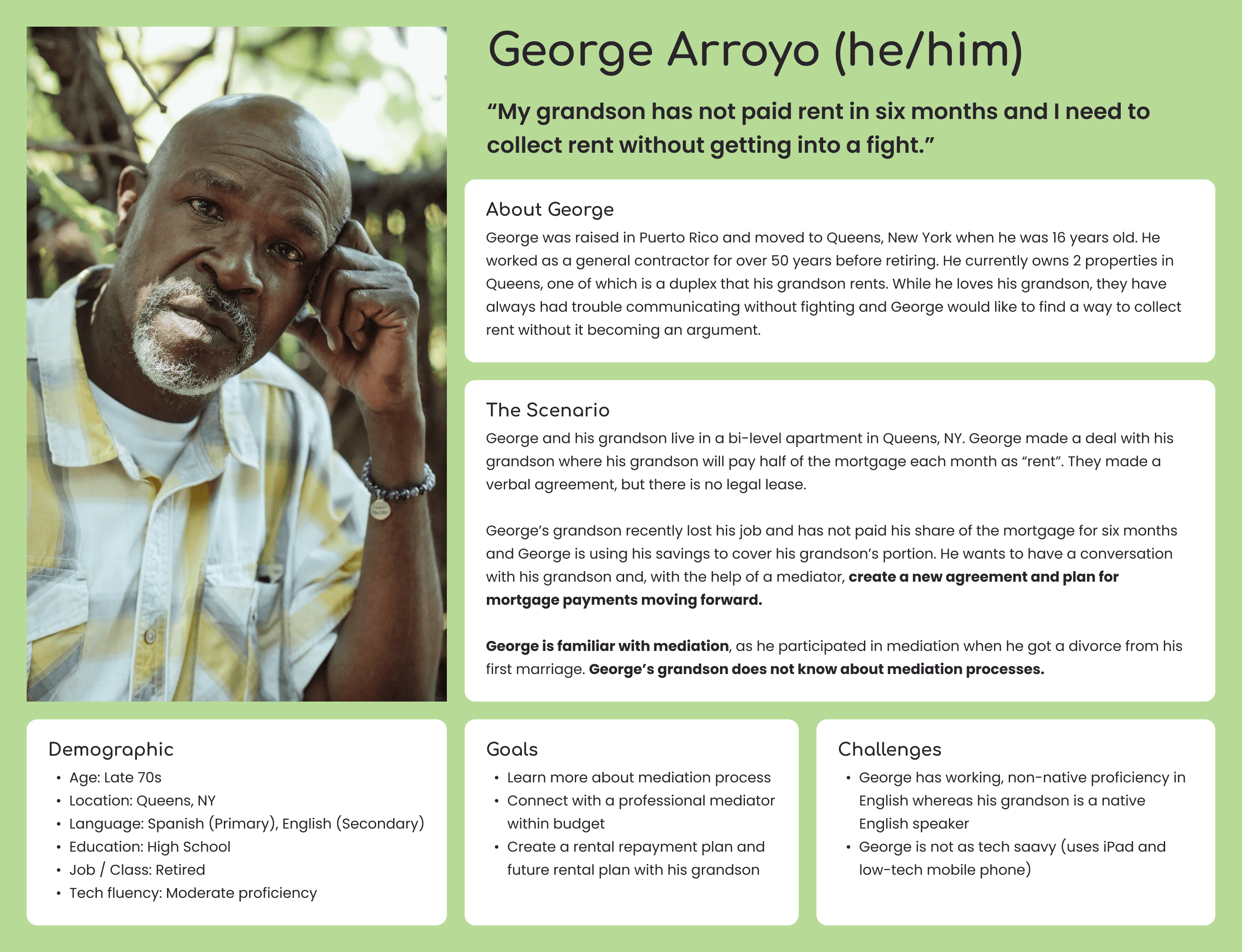
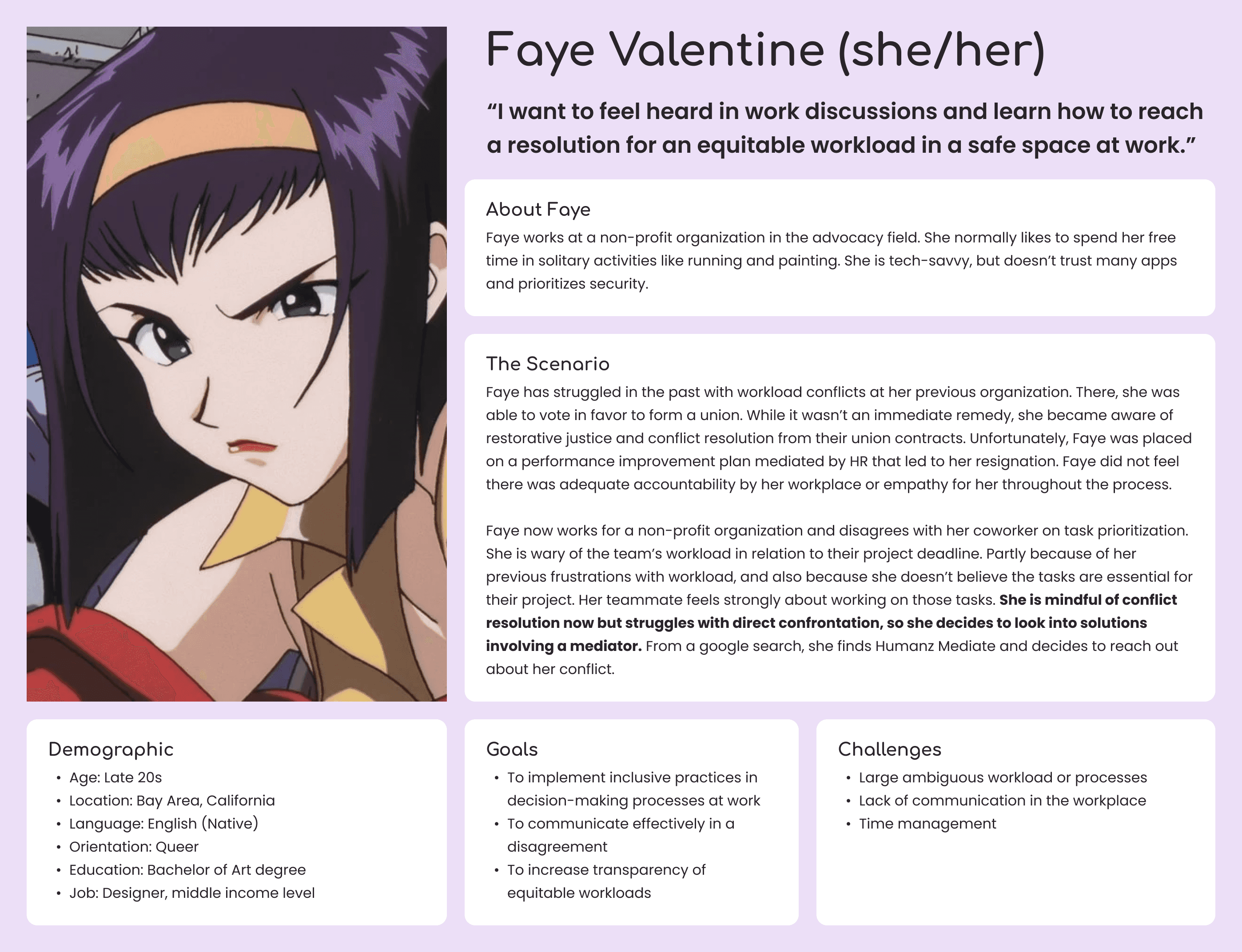
Personas
User Journey
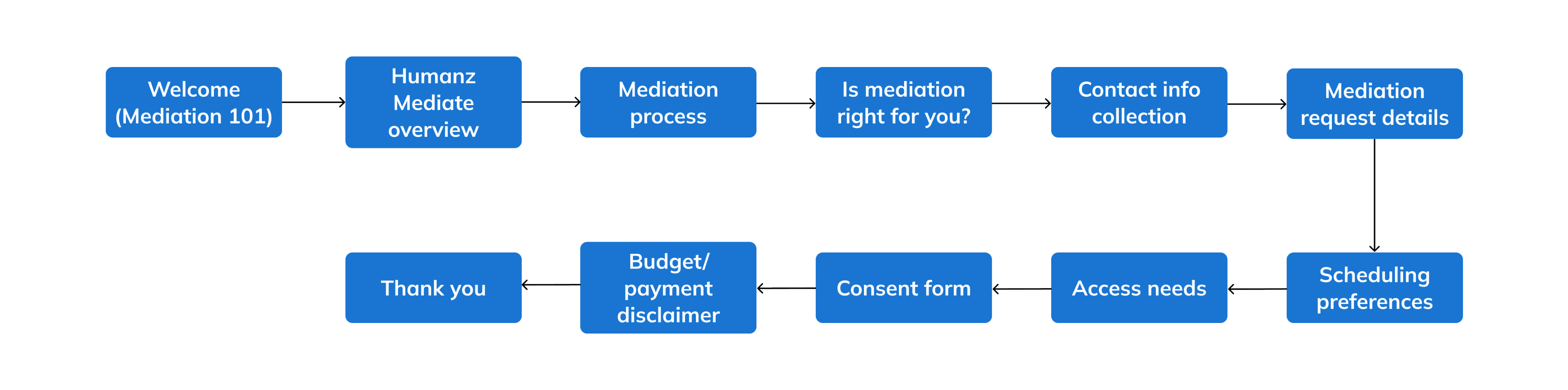
We created a user journey for the full intake process from educational onboarding to form submission. In our first draft, we included screens to collect scheduling information and payments, which we thought were important for transparency.
After more consideration, we decided to remove extra data-collection screens that would require a direct conversation with a mediator at a latter point in the process. We were reminded that the intake is only the beginning of the mediation process.
First draft of user journey
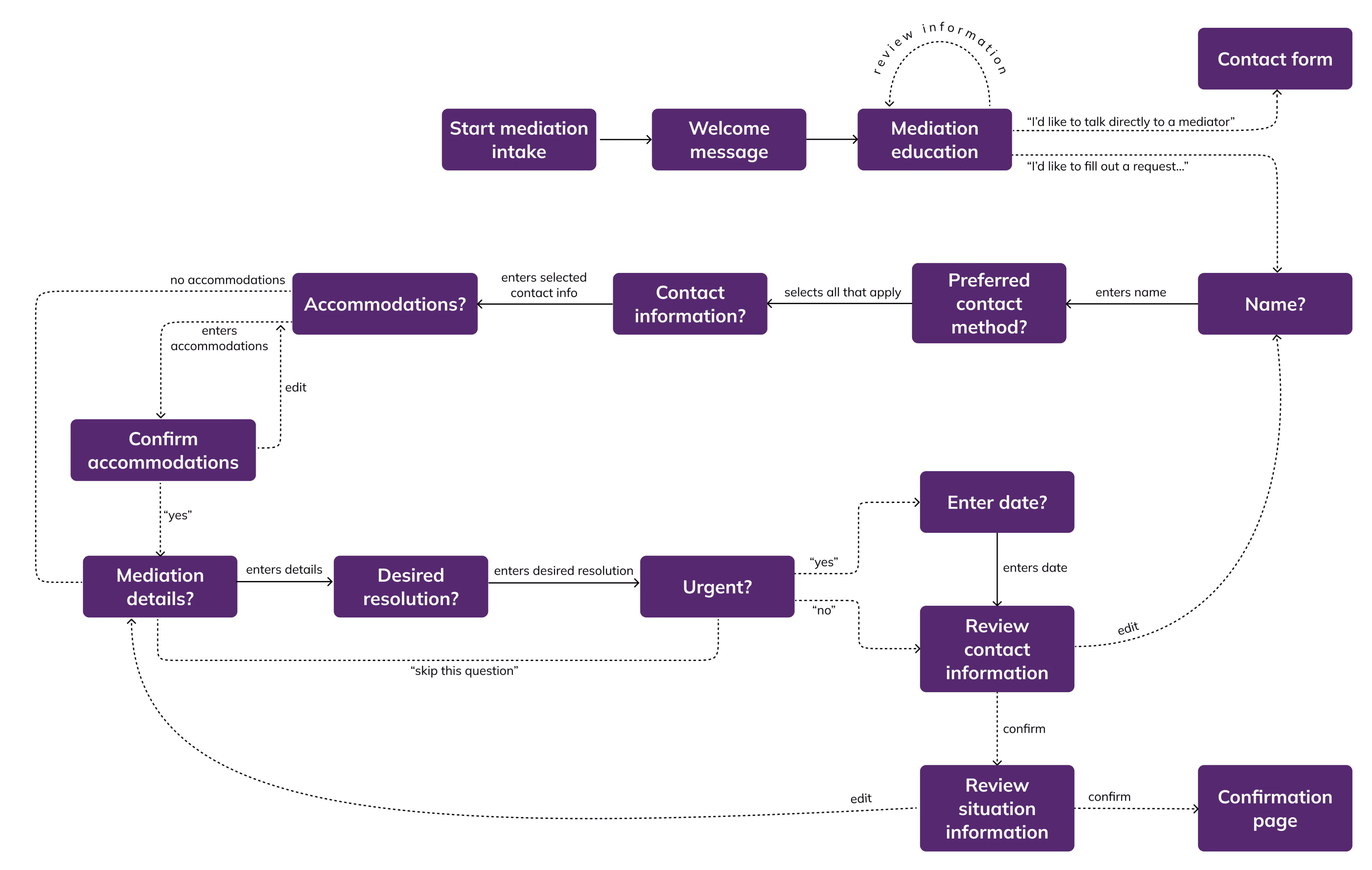
We adjusted the final user journey to collect only the most essential information. For the final user journey we implemented progressive disclosure, which resulted in more screens with smaller pieces of information. We also added multiple exit points for the user, such as navigating to a contact page or skipping sensitive questions.
Final user journey
Testing + Iterations
Guided by mentor feedback and prototype testing, we continued to iterate on our designs and made significant changes from our mid-fidelity wireframes to our final designs.
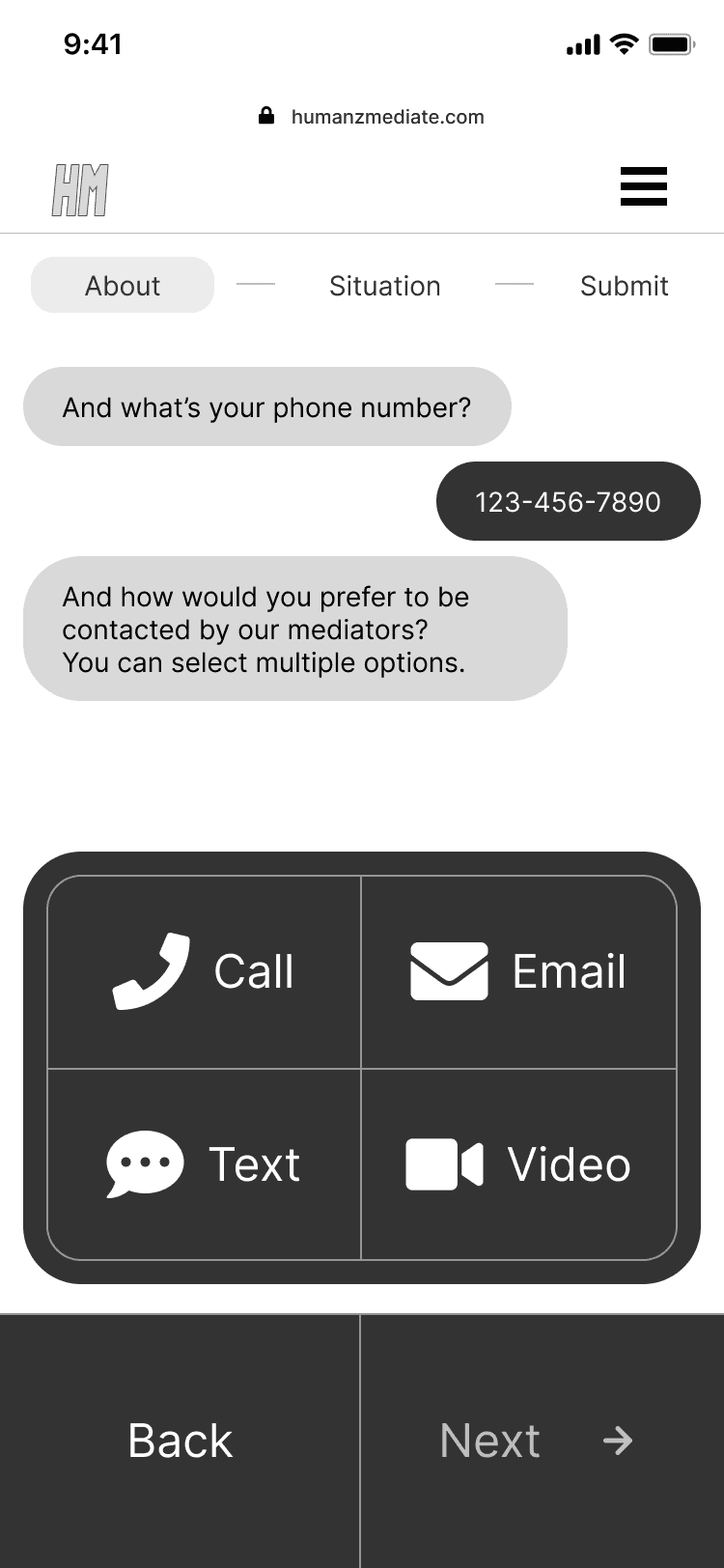
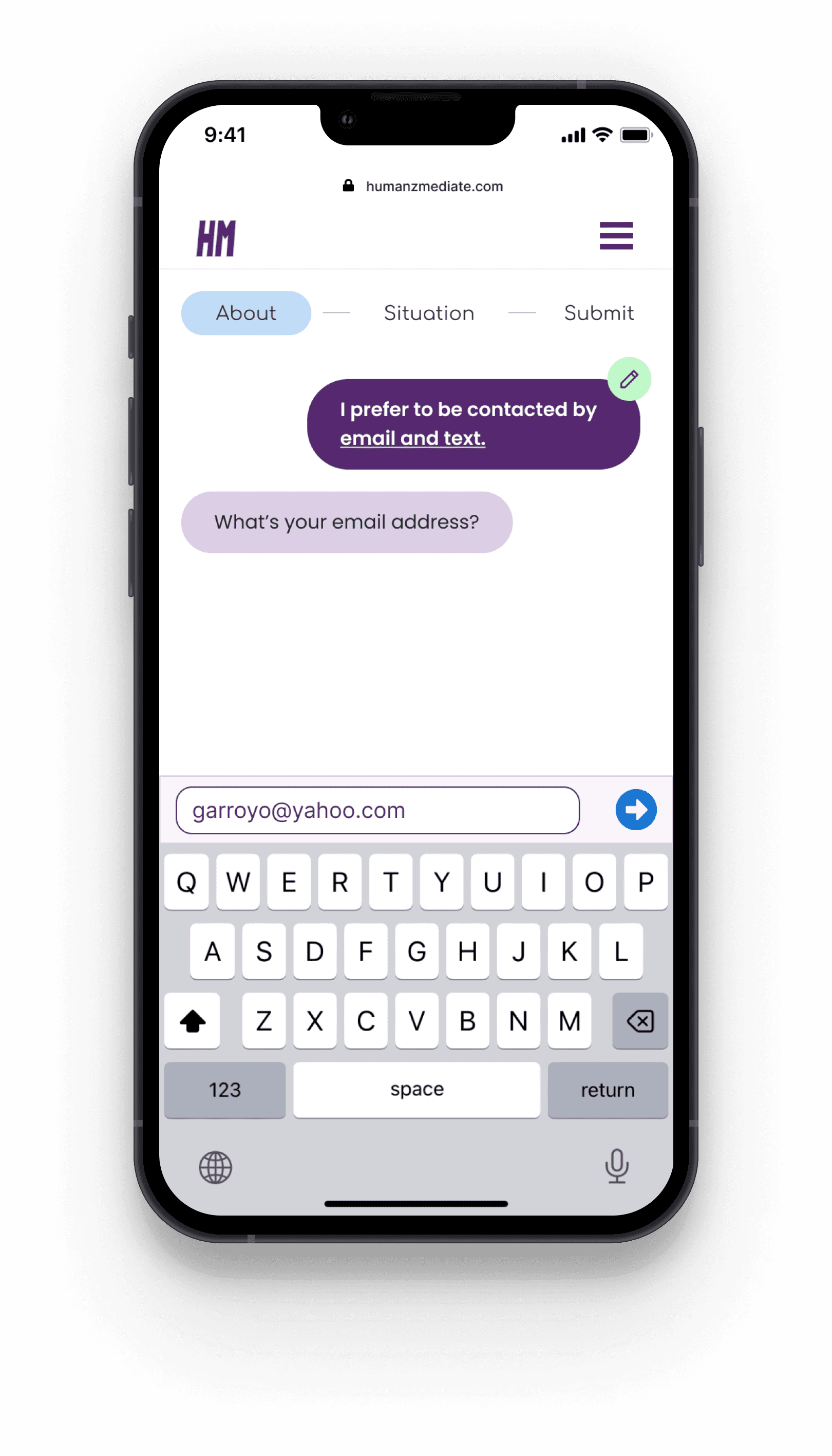
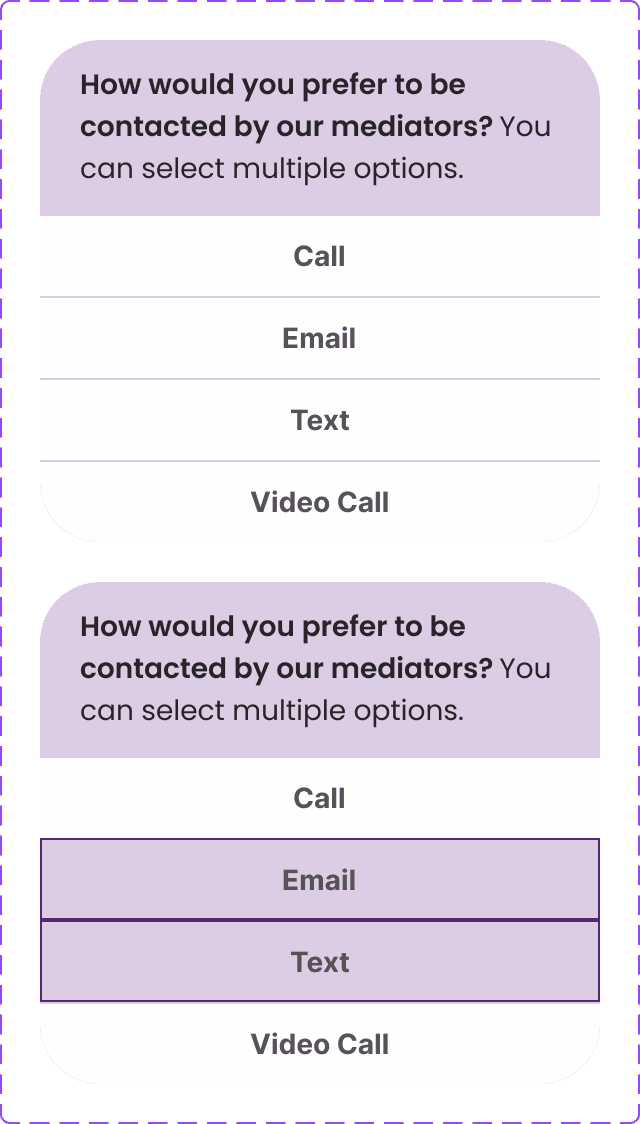
We focused on retrieving only the most essential information by removing some questions (such as scheduling) and inverting the order of questions (such as contact preferences). This increases data safety for the user and eliminates irrelevant information for mediation.
Collect only the most essential data
1
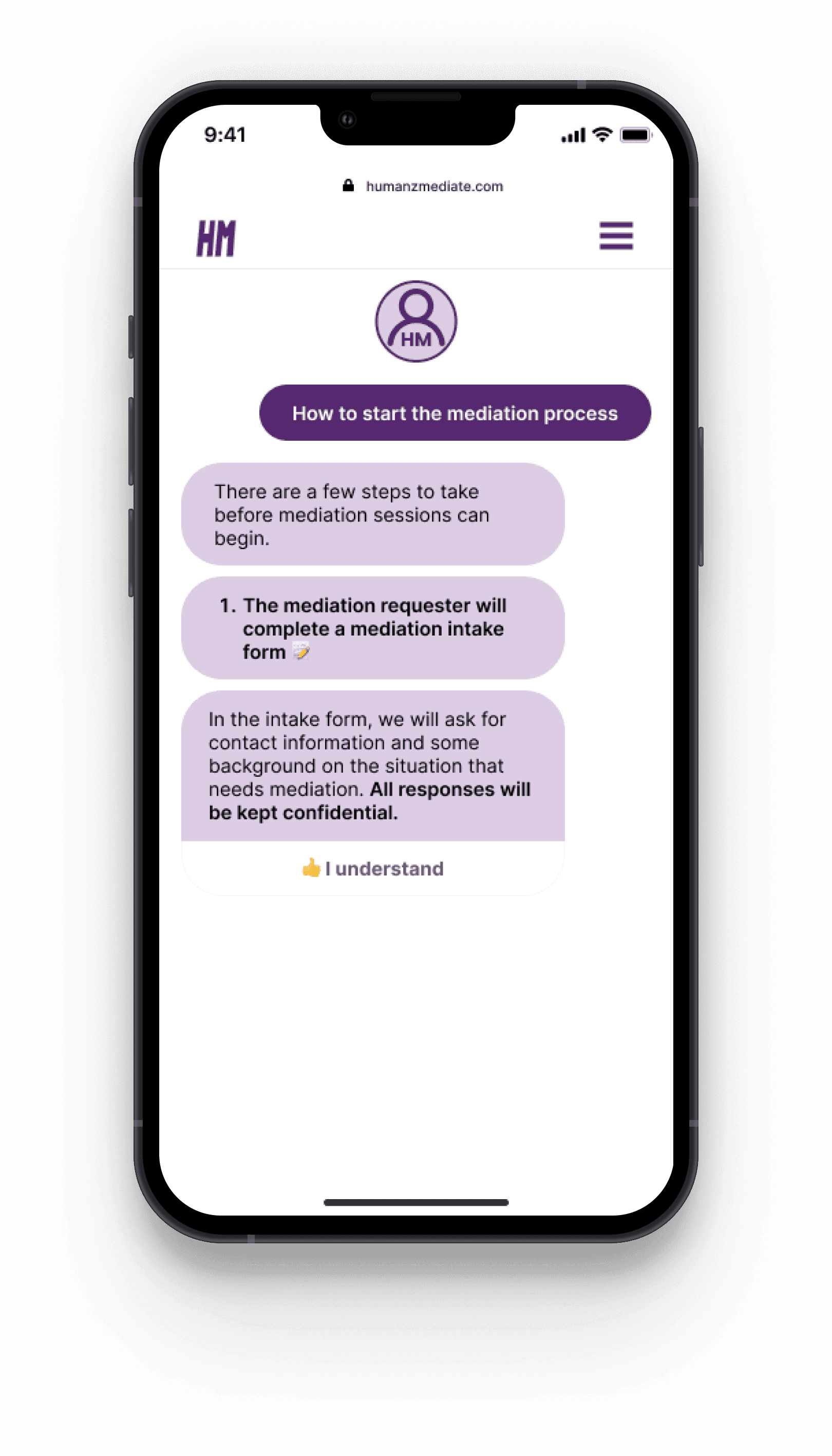
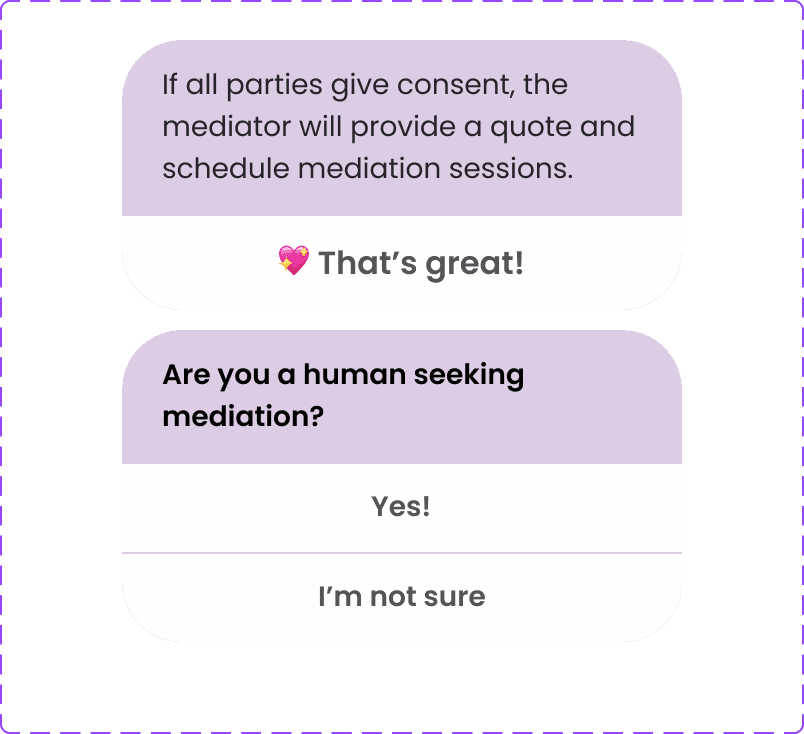
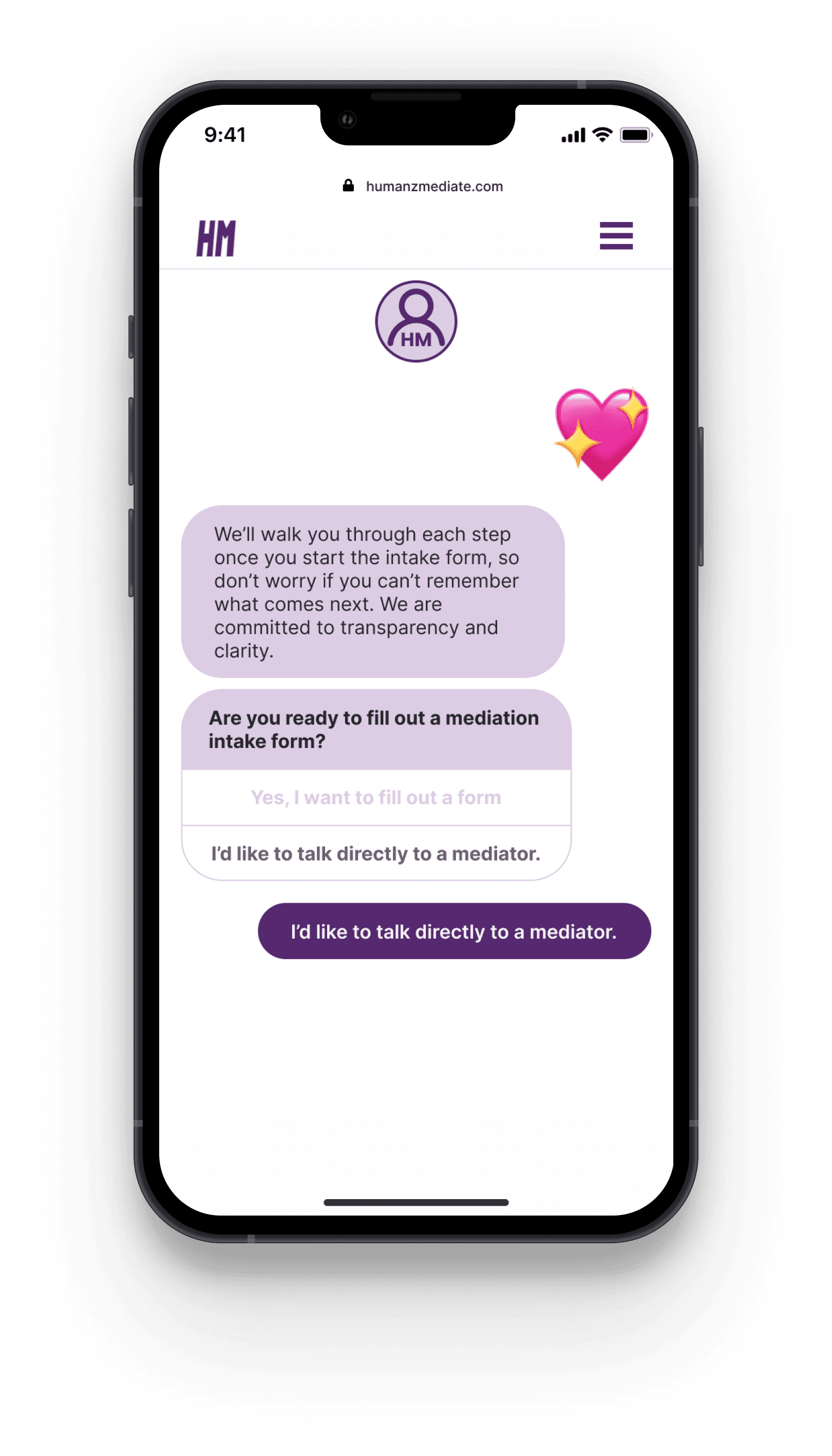
Inspired by other chat interfaces on customer service websites, we redesigned the user controls to be integrated into the chat visualization. This change allowed for the user to playfully remain within the visual system of text messaging.
Integrated user controls
2
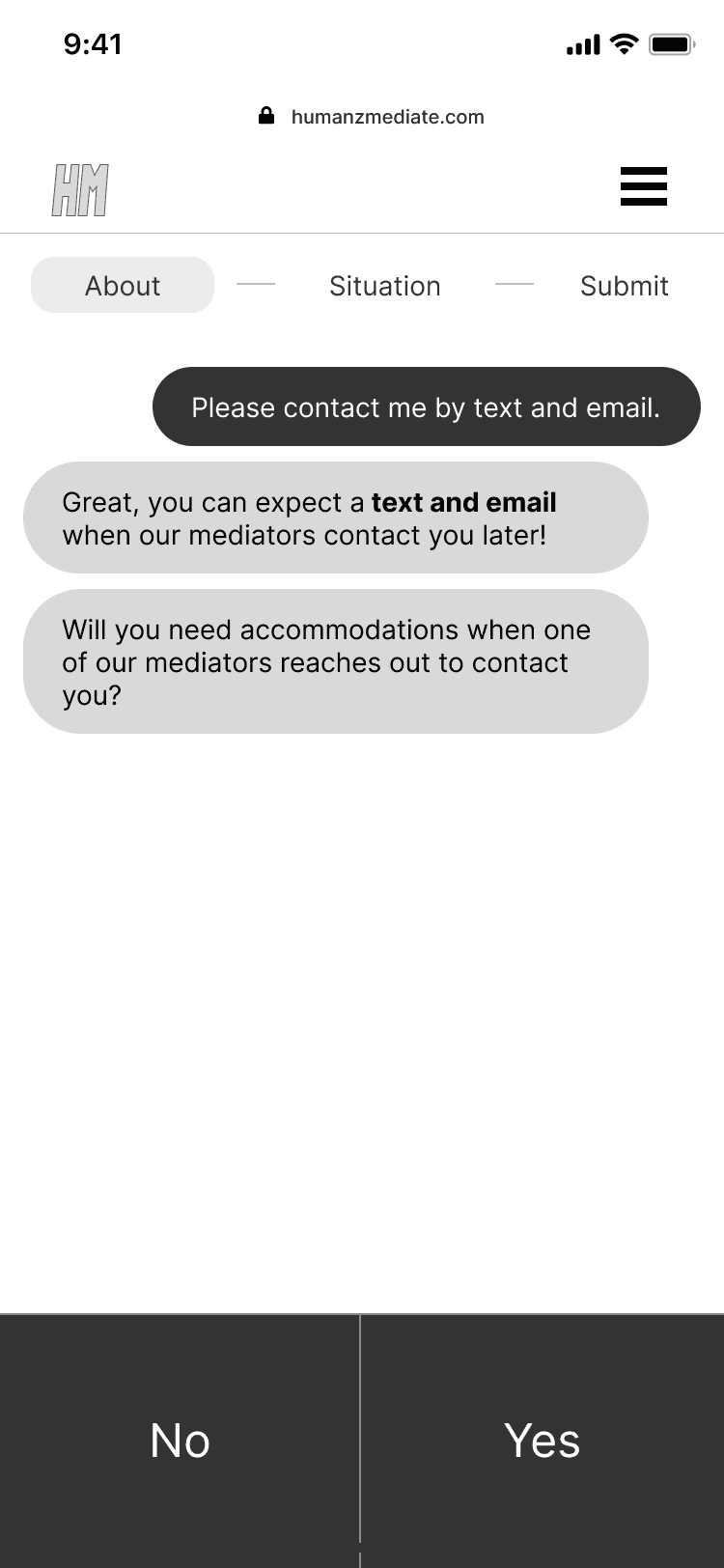
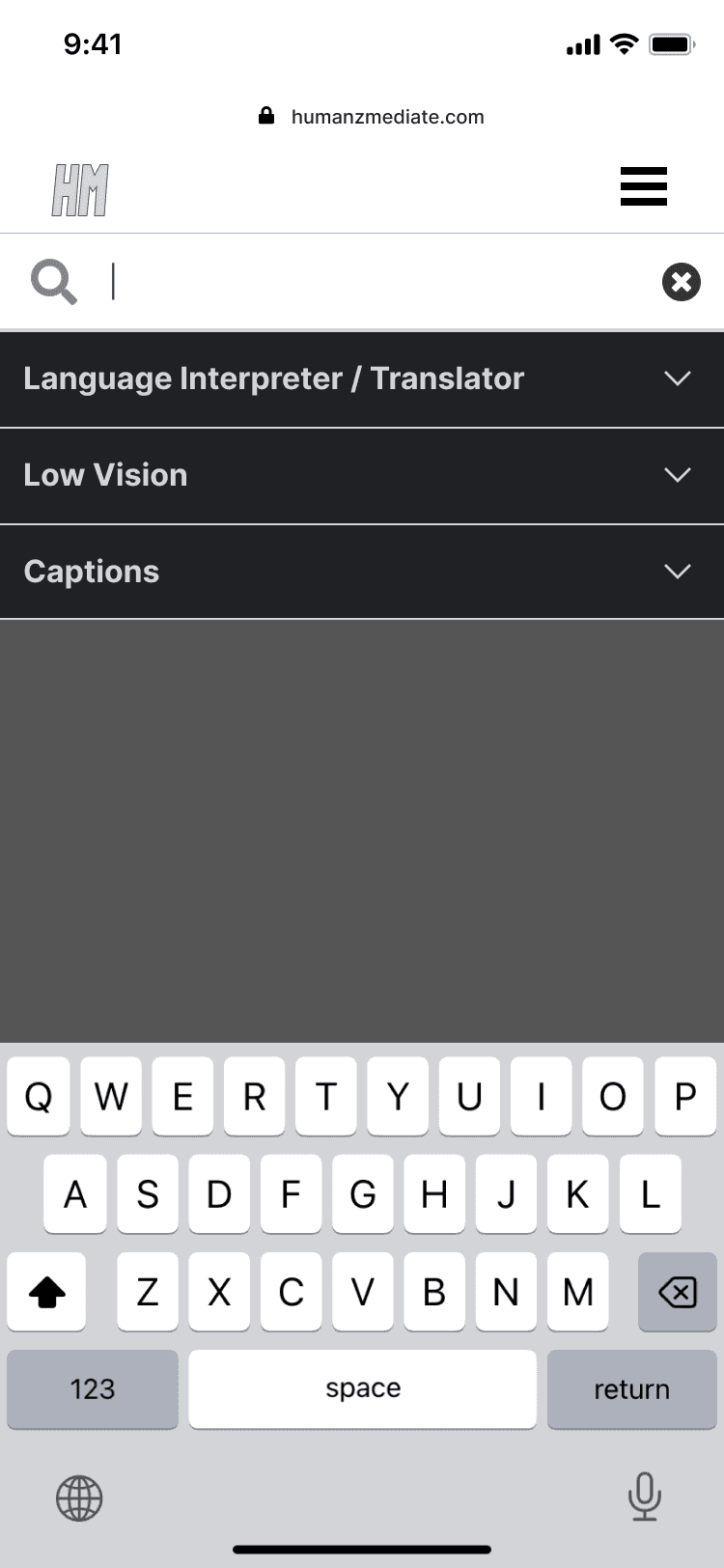
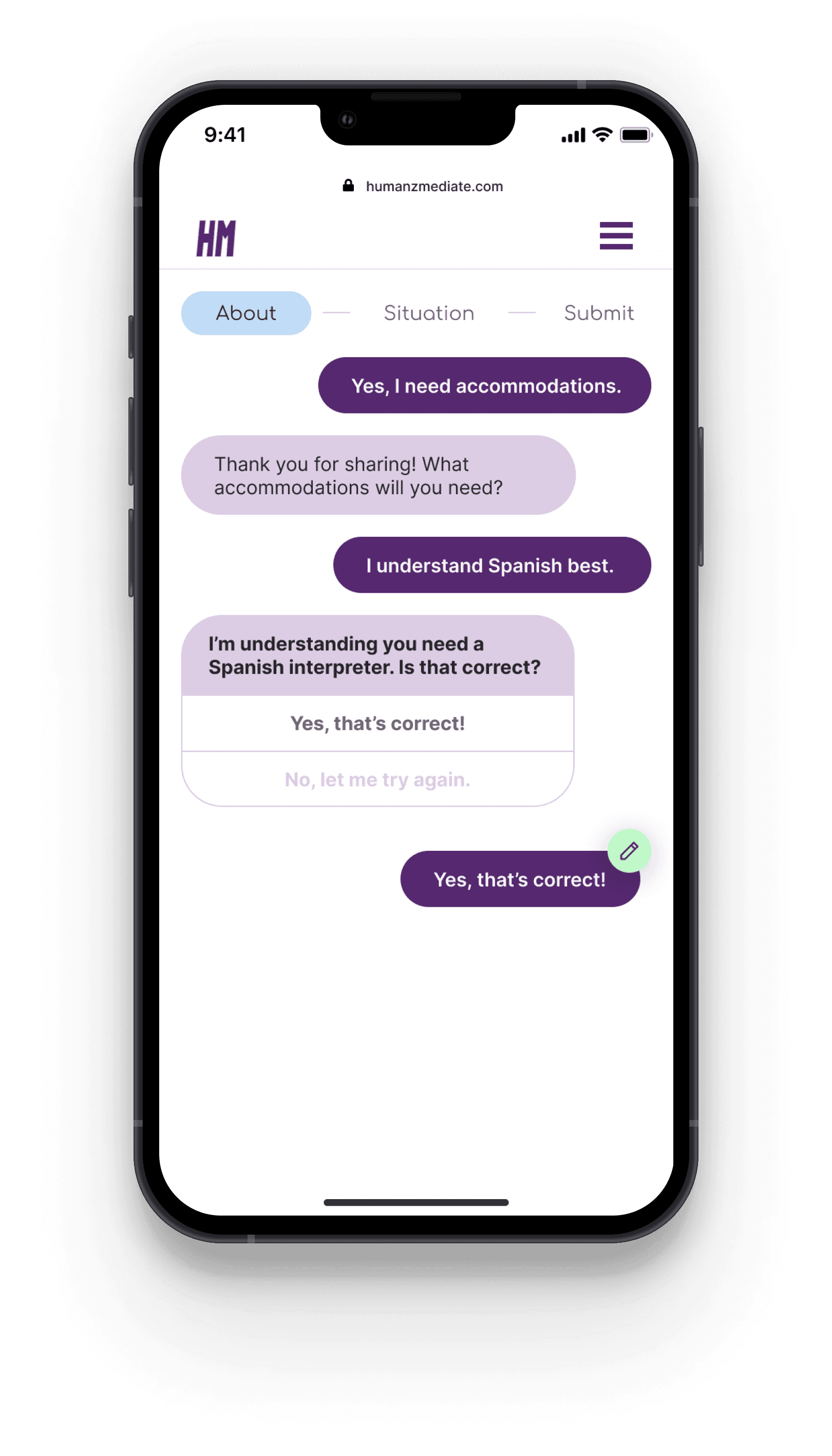
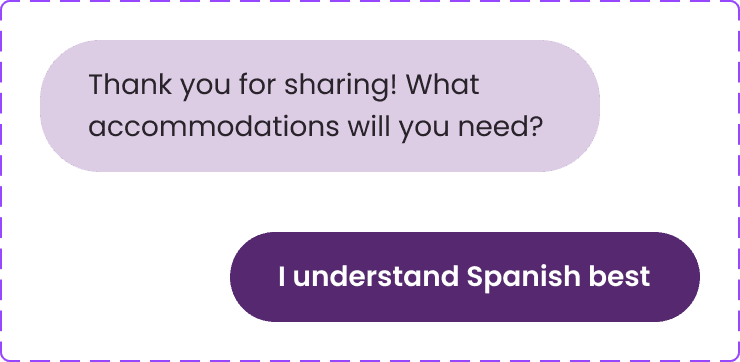
Rather than having the user select accommodations from a list, we envisioned the possibility of AI recognition for a user-entered accommodation. This would eliminate the possibility of specific accommodations being overlooked or missing from a pre-selected list.
Inclusion of AI
3
High Fidelity Prototype
Visual System
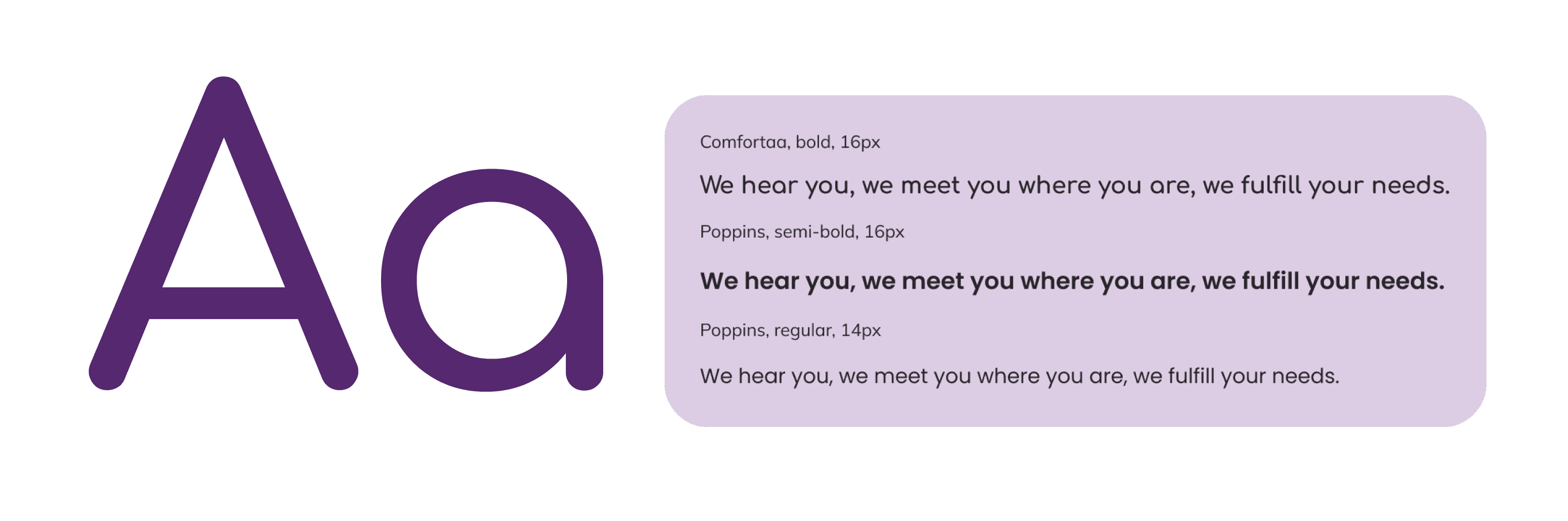
Typography
When choosing typefaces, we first considered accessibility for the client and users:
free font for the client to use on any platform
easily legible in cases where users may have dyslexia or other disabilities
We then considered what feelings we wanted to evoke from the user:
Comfort and ease
Serious, but not rigid
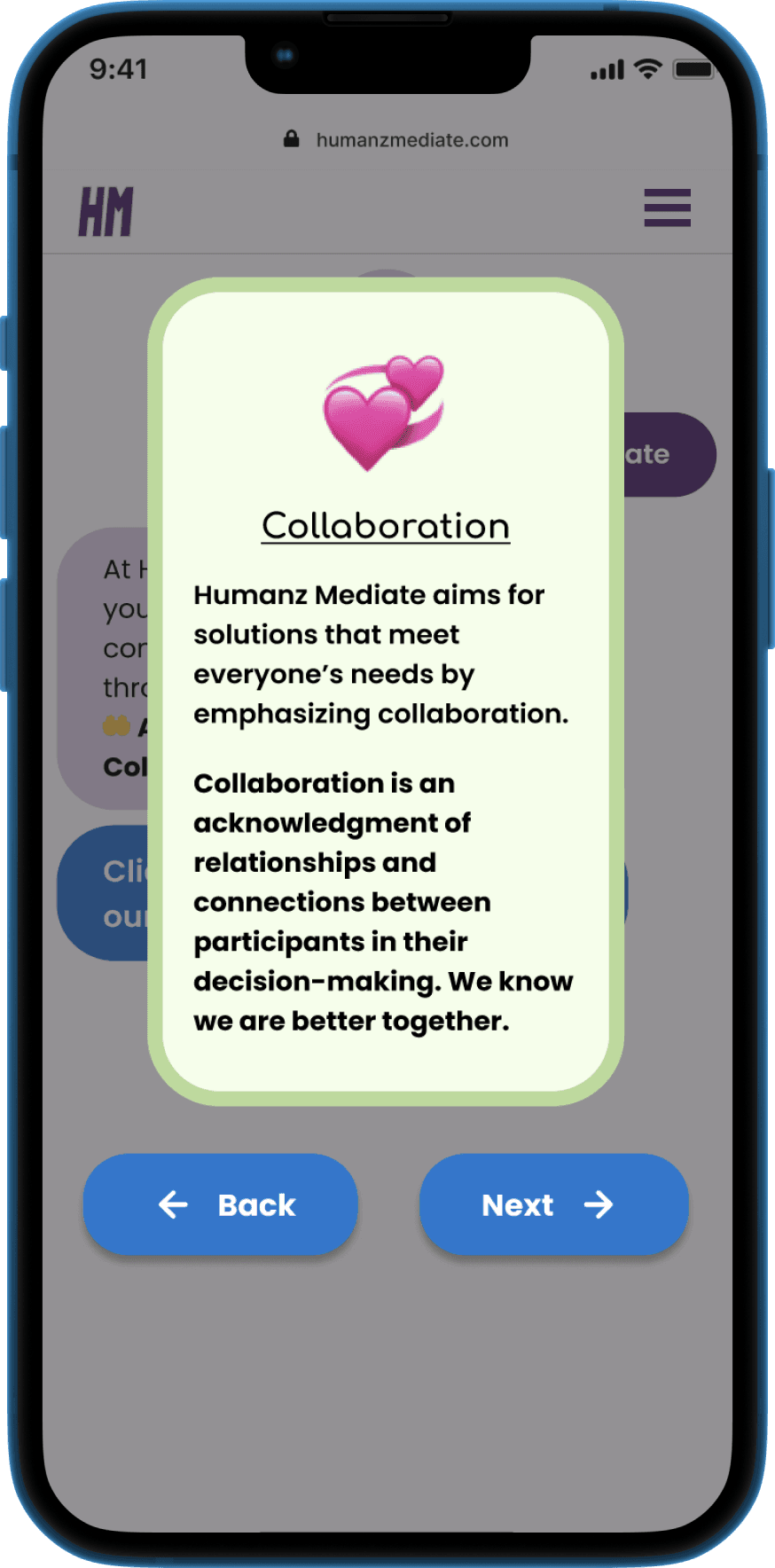
Implementing the psychology of color, we picked three main colors that matched Humanz Mediate’s three core values: Collaboration, Consent, and Acceptance. Each color characteristic matches with their respective core value.
Colors
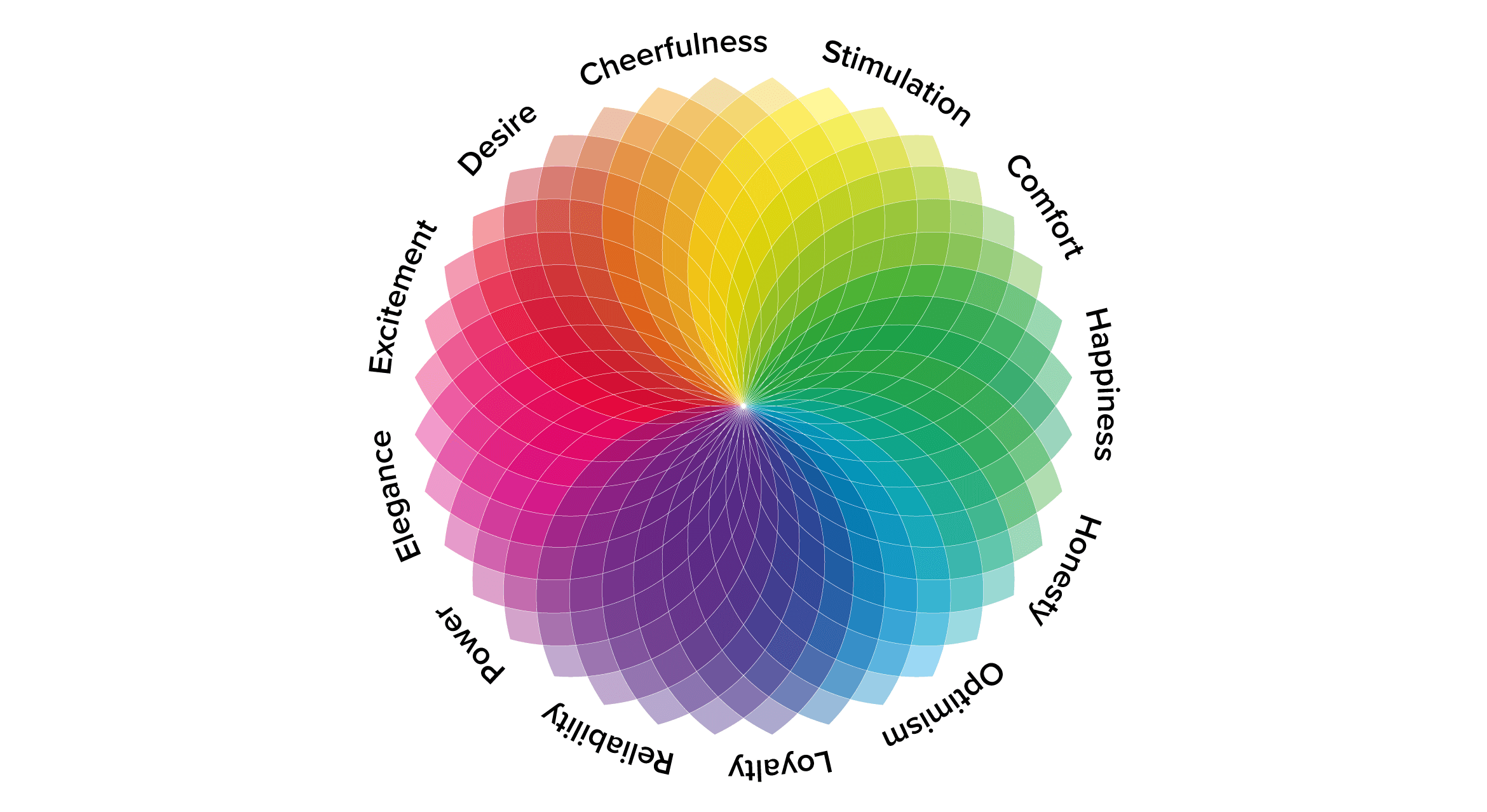
Collaboration
#55286F
#DCCDE4
#F9F5FC
Consent
#1975D1
#C1DCF6
Acceptance
#B7DB97
#F4FFE9
Components
Messages
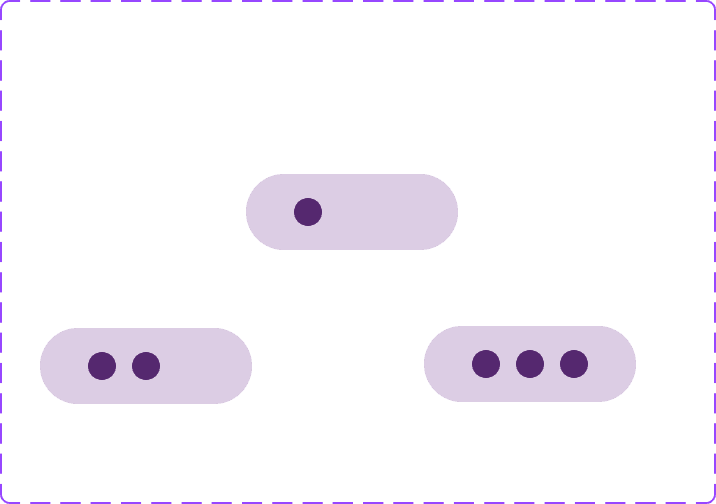
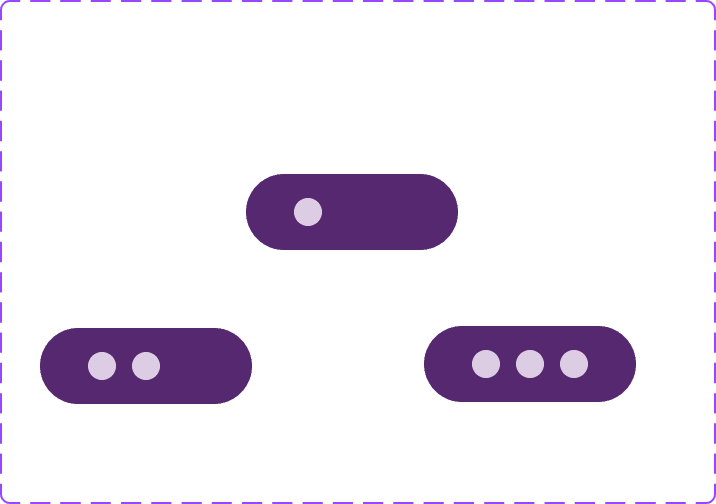
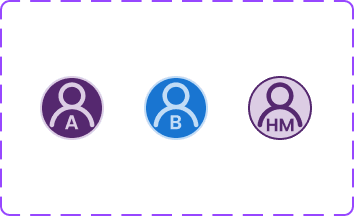
Informational
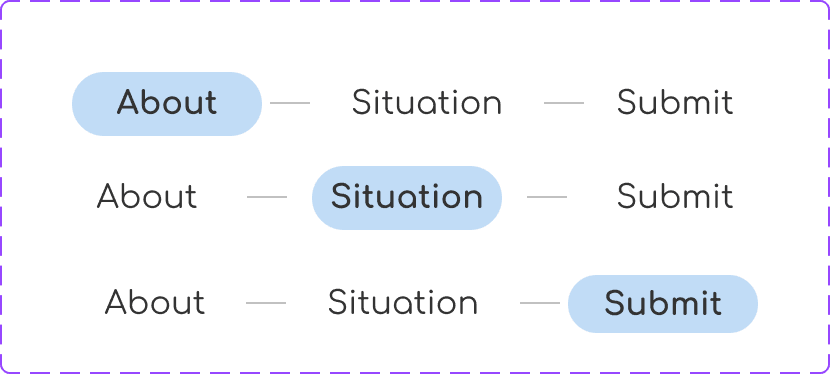
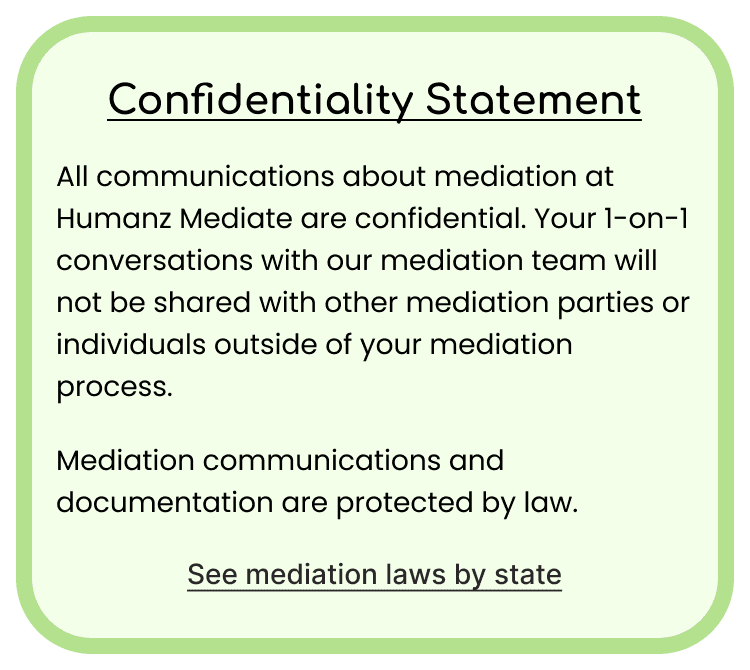
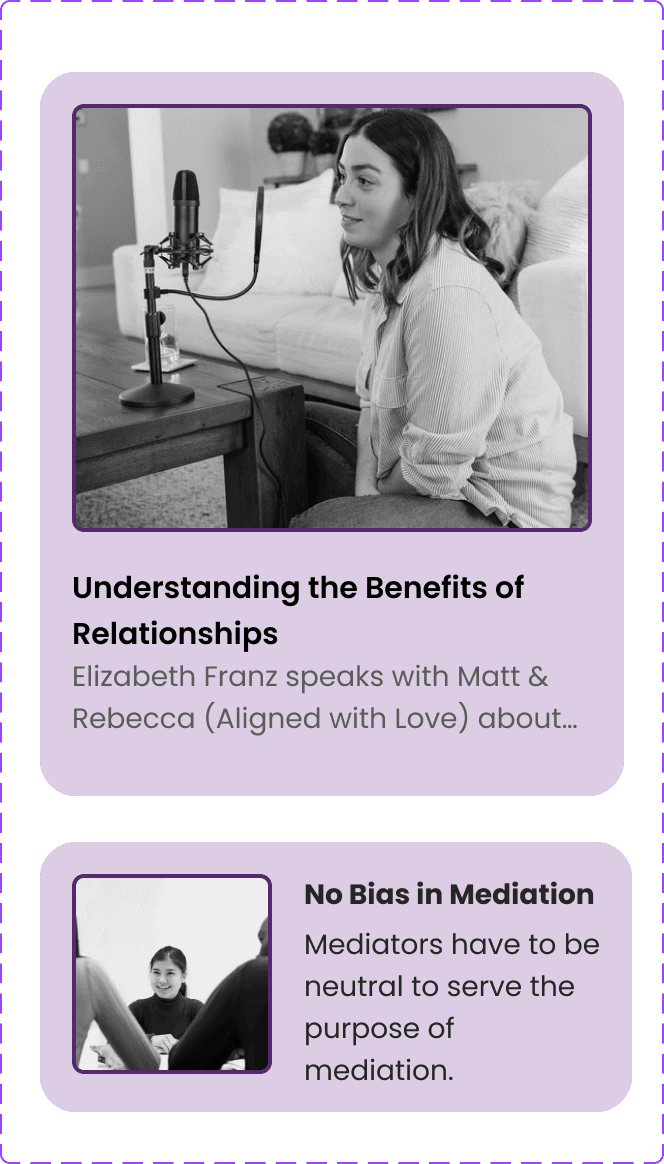
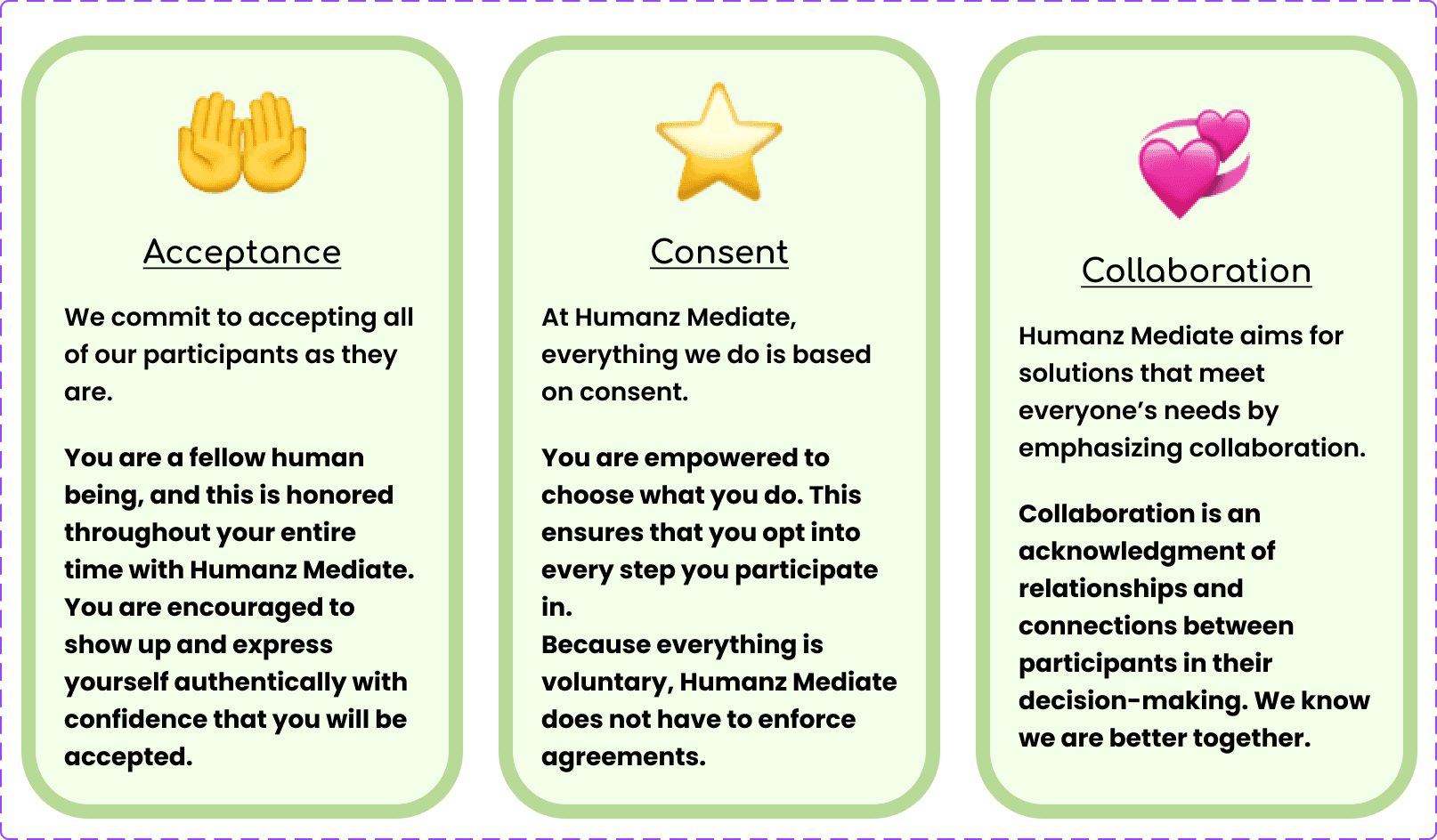
Buttons



Features & Solutions
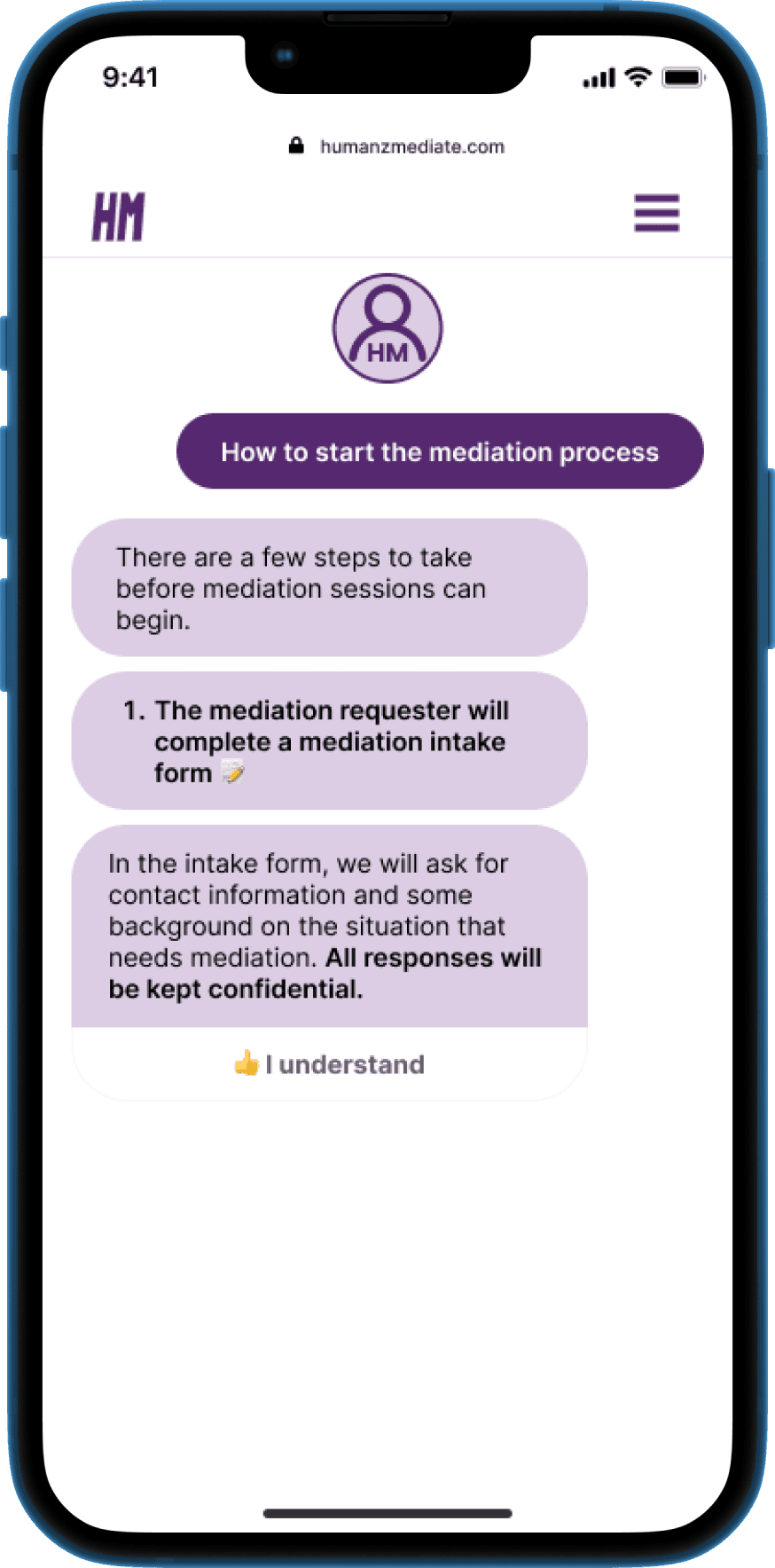
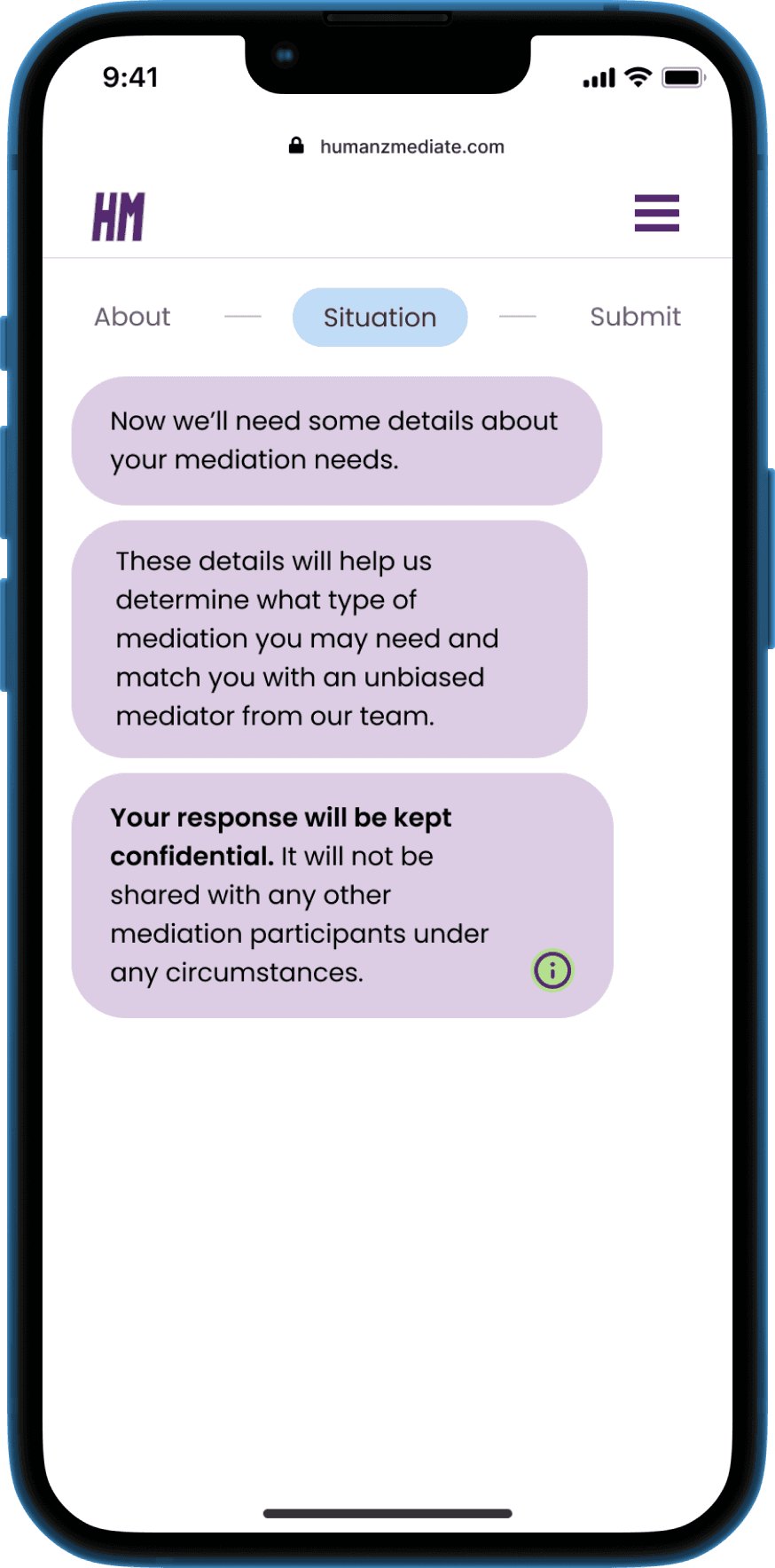
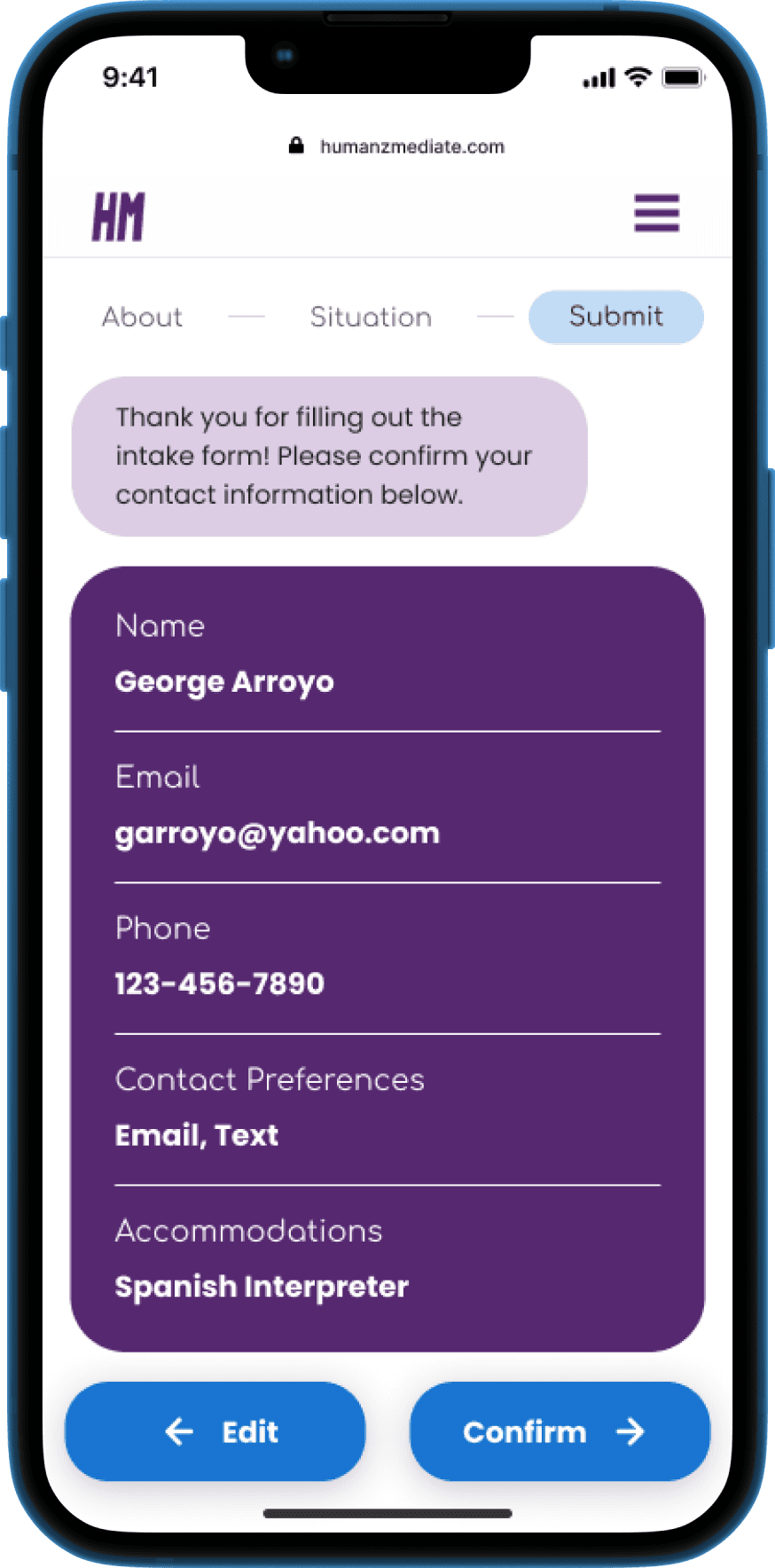
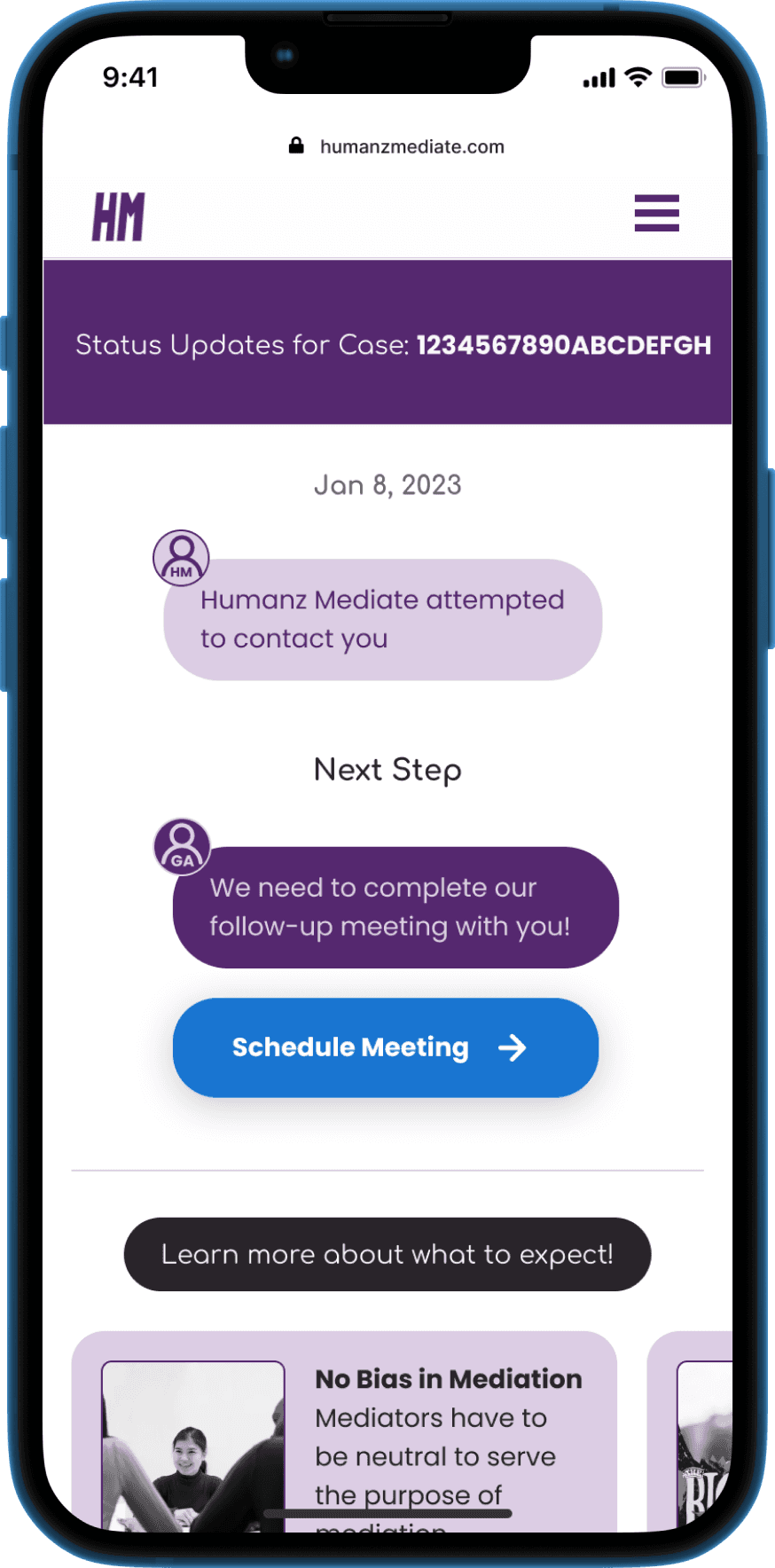
The final product is an enjoyable and accessible intake process that helps users feel prepared and empowered in navigating their conflicts and also collects the core information necessary for the Humanz Mediate team to coordinate mediation.
1
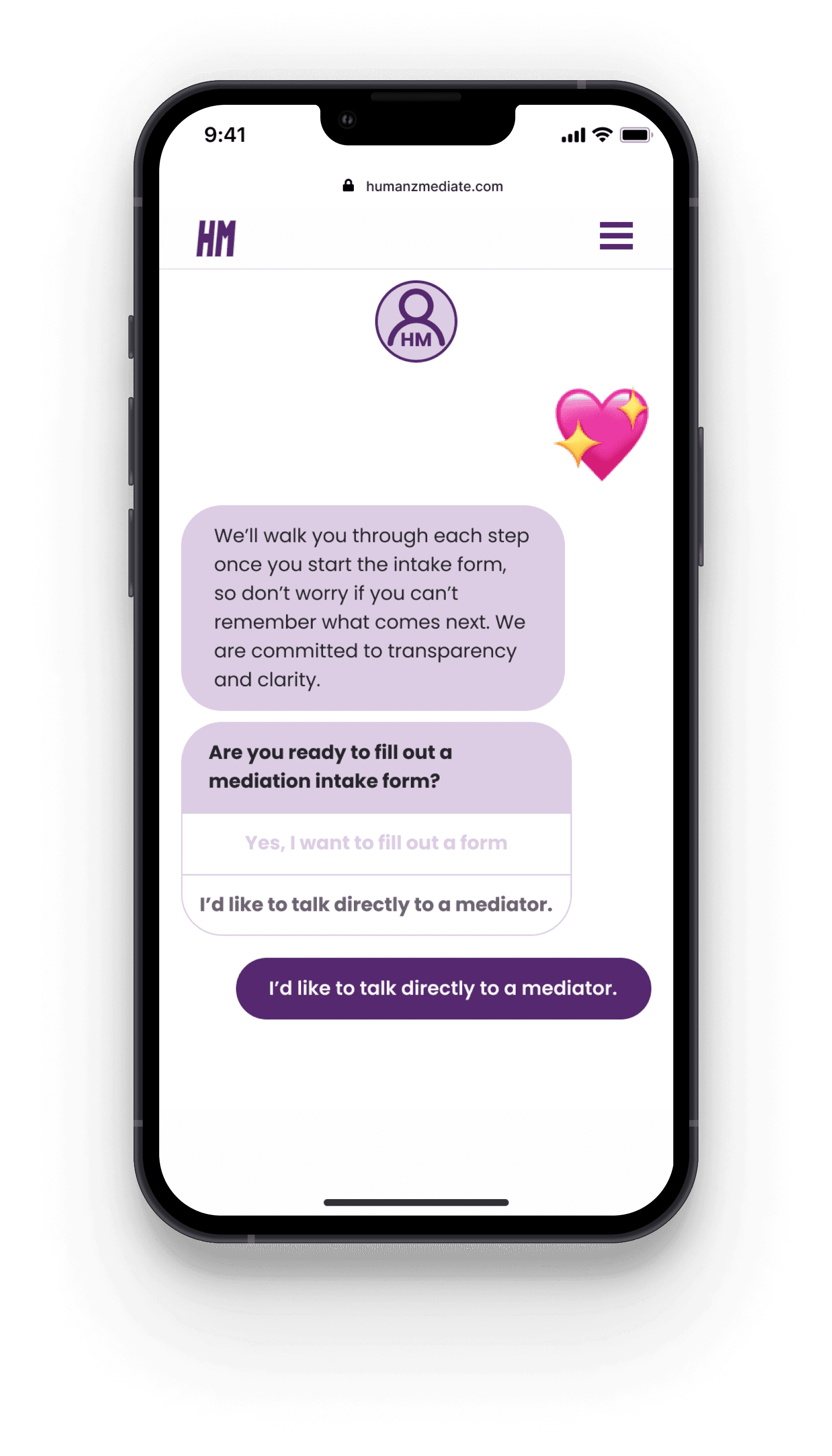
Text Messaging
Receiving a “text back” validates user with a more human-like interaction
Texting animations are delightful and keep the user engaged
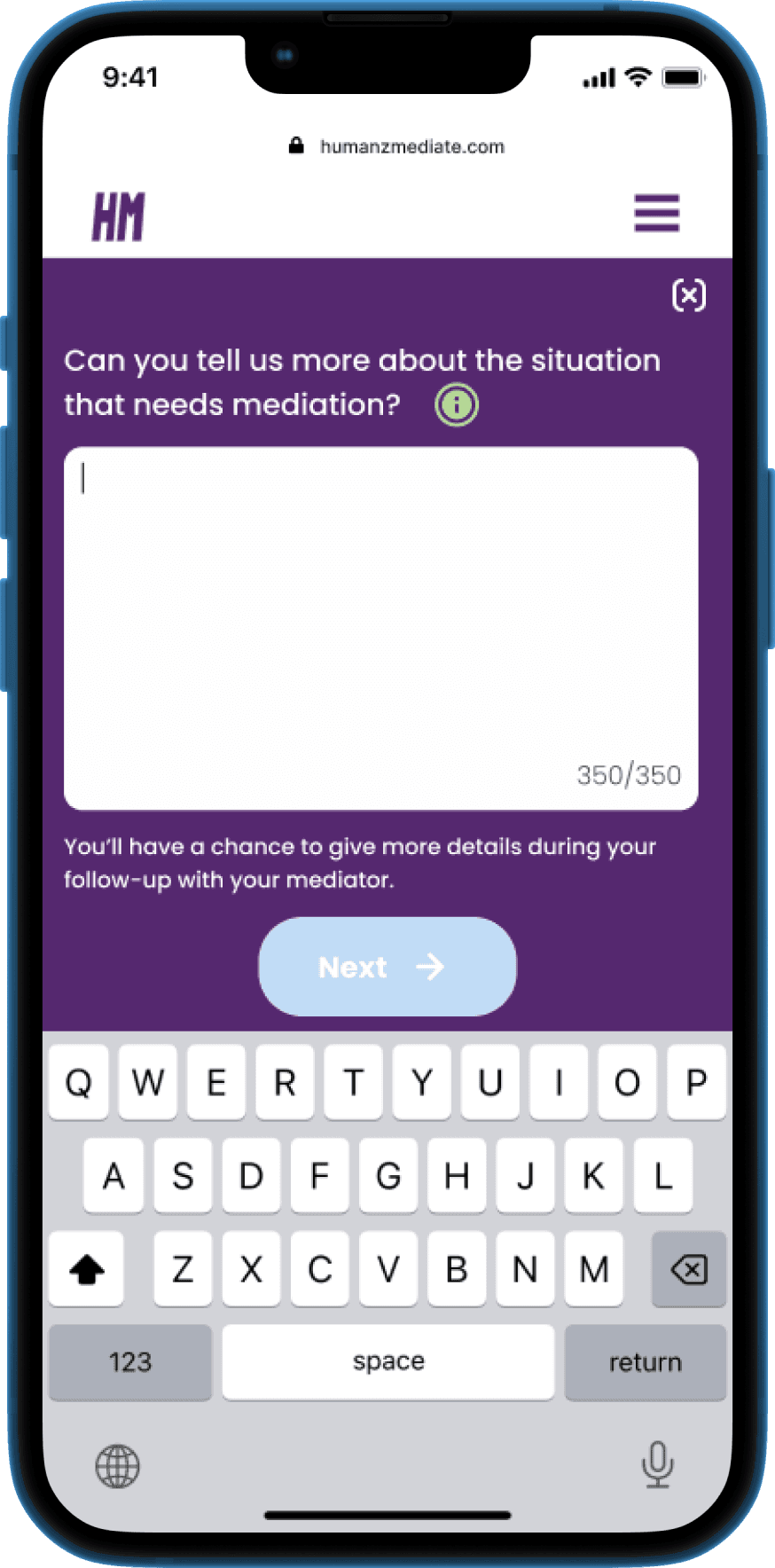
Including a mix of open-ended questions and pre-selected responses allows user to choose their own journey
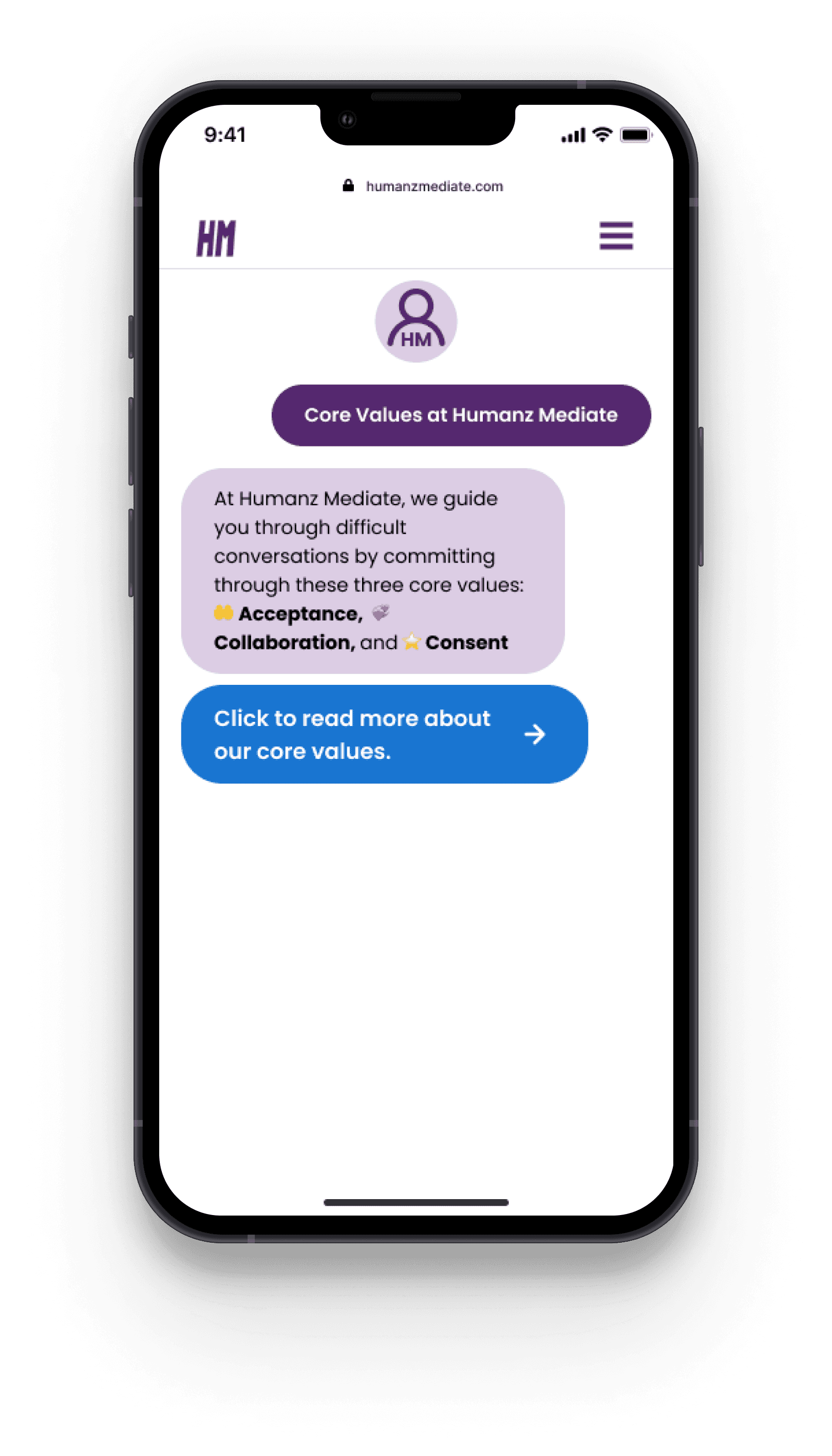
Mediation education
User learns about how mediation is practiced at Humanz Mediate as part of onboarding
Essential mediation info is presented throughout the intake process so that user can give informed consent to each step
2
Clarity and Control
User can skip sensitive questions, edit responses, and leave the intake form altogether
Status page allows user to keep up-to-date and navigate next steps of the mediation process
Progressive disclosure eases cognitive load for user
3
Final Screens
Reflections
This is the first client-facing UX project that I’ve completed and I’m grateful to have done this alongside of my QTBIPOC Design cohort. While I started the research process alone, I was lucky to combine projects with Mina during the wireframing stage and I’m incredibly proud of the product we were able to build together.
What did I learn?
In this case, referencing text messaging within our design added a sense of familiarity and delight not only for the user but also for myself as a designer.
Mediation is not a straightforward as it seems from first glance, and there is a lot of nuance to be considered when designing a product for this industry.
Designing for the most vulnerable user allows for the greatest accessibility to the product.
What would I do differently next time?
Given more time, I’d love to have been able to do more prototype testing with Humanz Mediate users, not just our own interviewees.
We removed the payment screen from the final user journey to try paring down the form to its most essential parts, but I think payment is an important part of transparency and would want to include language about pricing at the beginning of the intake.
Check out my other work
Indeed
Mobile app navigation |
improving the job search experience
User research, information architecture, wireframing
View case study